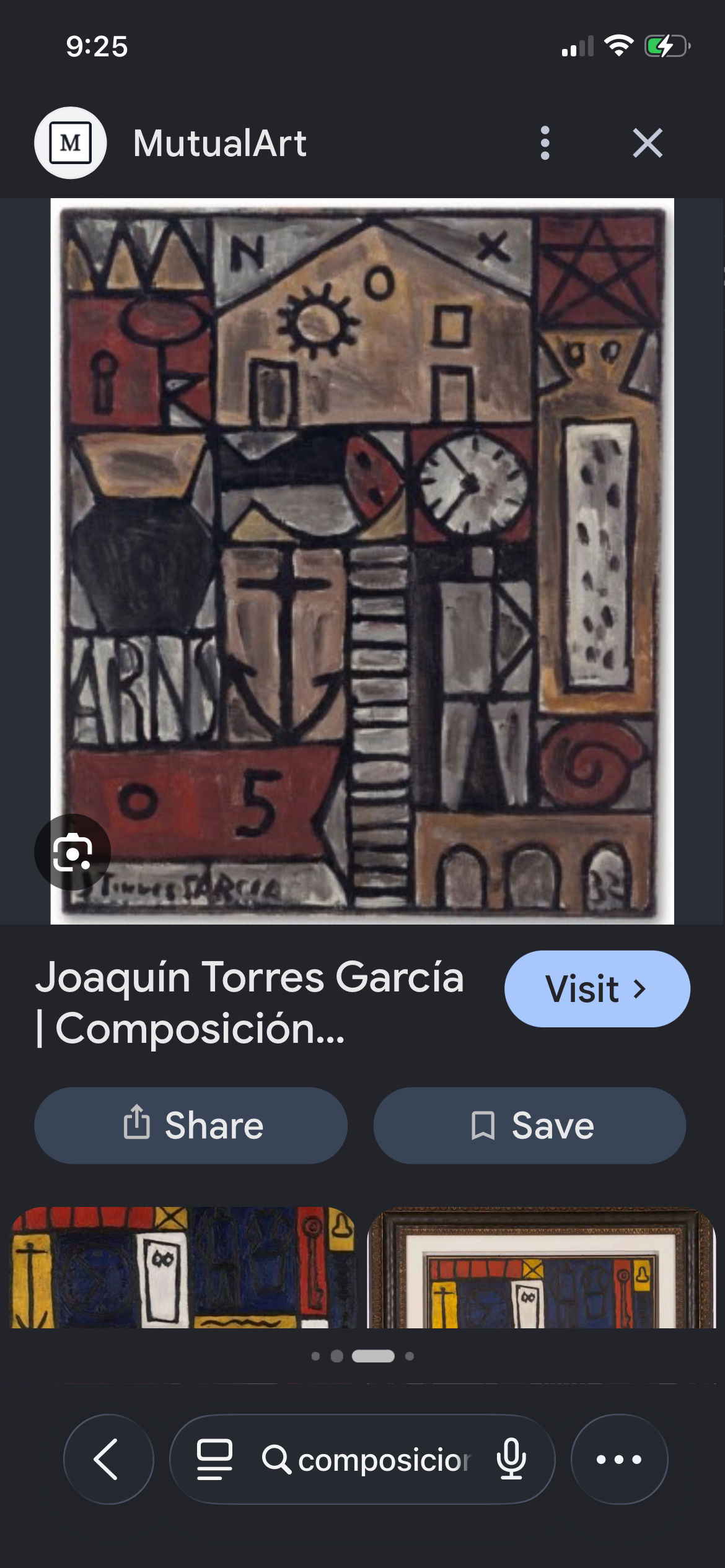
The weavers guild I belong to decided to visit the Cleveland Museum of Art to speak with the textile conservator. We were so lucky to have a couple of hours to explore the museum and another couple of hours to learn from the conservator. The photo above is of a piece of art I was enraptured by in the museum, they did ask on their website that we not take pictures of the art so I found this on google.
It was amazing to learn about conservation, preservation, what you can do to keep textiles looking their best, as well as ways to create repairs that are virtually seamless. It was fascinating to see that cotton twill tape has velcro soft loops attached to itself and then the twill tape is sewn to the textile for hanging purposes. The stiffer, sticky, portion of the velcro is attached to where the item is to be displayed, either on a French cleat or some other form of hanging. This allows the textile to not be caught on the sticky portion of the velcro, while distributing the weight of the textile.
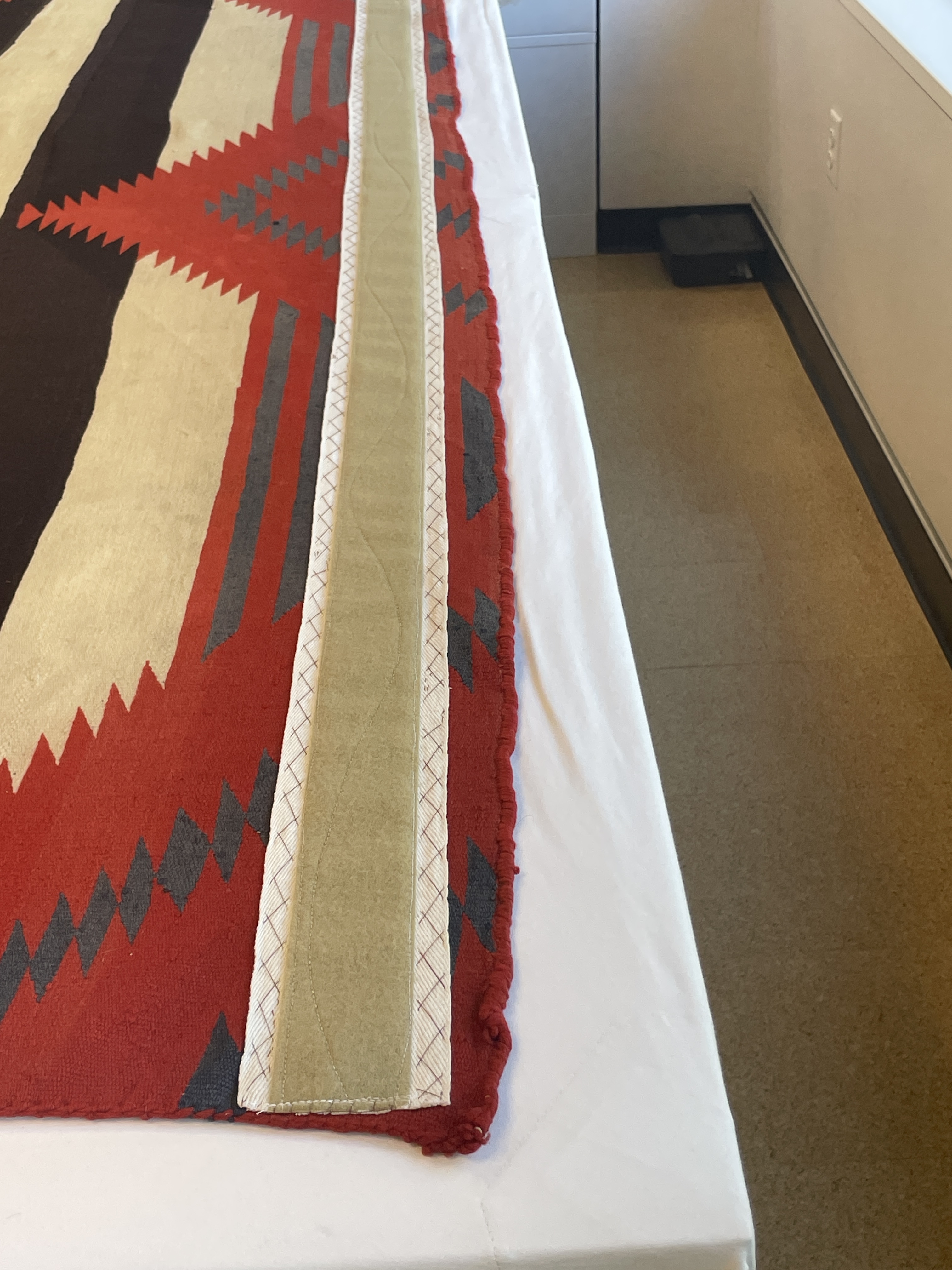
It was fascinating to see some of the conservation that they perform, as well as understanding how they need to balance the conservation with the time and energy they have to devote to that particular exhibition. I did learn quite a bit about how they display, store, and preserve textiles. One of the methods that fascinated me is the pressure mounting. This is where they use either an acrylic box or some art mounting boards like what you would find in framing photographs, as well as batting and a backing cloth to cushion and preserve the textile by having it pressed against the top and bottom pieces. This keeps it flat, prevents any shifting that can cause damage to the pieces, and prevents most handling which will keep it in the best shape possible.
For the backing cloth the conservator recommended either Rayon lens tissue or silk crepeline with muslin underneath to cushion it. Apparently three companies that also make the acrylic boxes are University Products, Small Court and Gemini Builds it. They use tyvek for storage and to cover the textiles to prevent damage from sun, dust, etc. They also use Hollytex labels with as much information as they have to ensure that the information is also preserved. They also use Cotton Bobbinette for repairs, they sew with curved surgical needles since they tend to be finer than sewing needles.
I was so happy to have the time with the conservator, as well as the amazing questions that my fellow weavers guild members asked. Since this museum is less than 3 hours away I plan to visit at least one or two time in the next two years since they have some amazing exhibitions coming up. The two major expenses are the gas (of course) and a $14 parking fee. I could purchase a membership, however that is $75 and for how often I plan on going I do not think it would be worth it.
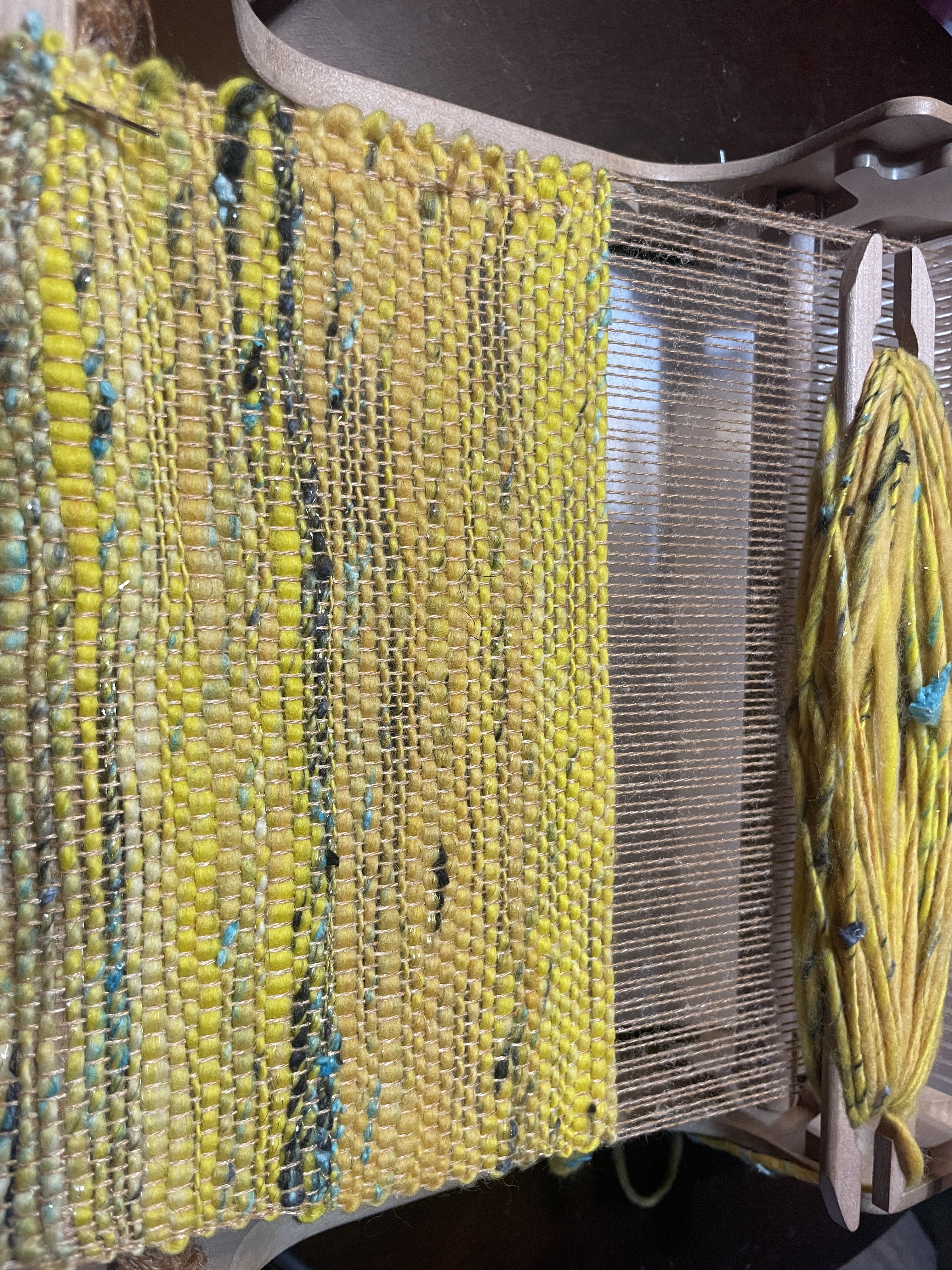
I did make some progress on an alpaca and wool scarf I am currently weaving, as well as some progress on a secret project.
Until next time remember to live life a Little More Abstract!

